Shock and Awe, Party Edition: The Tactical Playbook for Pulling Off a Surprise Celebration That Nobody Sees Coming
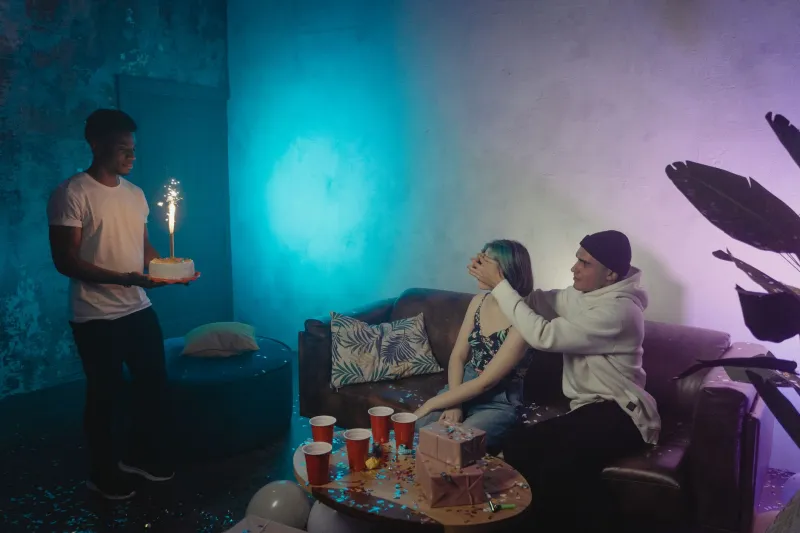
Surprise parties are one of the great high-wire acts of social life. When they work, they're the kind of moment people reference for decades—where were you when Jamie walked into that room and completely lost it? When they don't work, they're a cautionary tale told over drinks about the time Kevin found out three days early and had to fake being surprised anyway.
The difference between those two outcomes is almost entirely operational. Not budget. Not venue. Not how many balloons you ordered. It's the planning, the coordination, and the iron-clad secrecy that separates a legendary surprise from an expensive awkward dinner.
Here's your complete field guide.
Phase One: Lock Down the Inner Circle (And Vet Them Like You're Hiring)
The first and most critical decision you'll make is who gets to know. Keep this list ruthlessly short. Every person you bring into the loop is another potential leak, and leaks kill surprises faster than anything else.
Your core planning team should be three to five people maximum—ideally those with the best poker faces and the worst track records of blabbing. Before you bring anyone in, do a quick mental audit: Has this person ever accidentally ruined a surprise before? Do they overshare on social media? Are they going to text the guest of honor a cryptic "don't make plans Saturday" message?
If the answer to any of those is yes, they get a last-minute invitation, not an advance briefing.
For the broader guest list, a simple but firm communication strategy works best. Send invites through a channel the guest of honor doesn't monitor (a separate email chain, a group chat they're not in, a Facebook event set to private). Include explicit instructions: no posts, no stories, no "can't wait for Saturday!" comments on anyone's public profiles until after the reveal.
Phase Two: Build the Cover Story
Every great surprise party needs a convincing decoy plan—something that explains to the guest of honor why they need to be at a specific place at a specific time without tipping them off.
The best cover stories are plausible, low-key, and don't require the guest of honor to dress up too much (nothing kills a surprise like someone showing up in sweats when everyone else is dressed for a celebration). A "casual dinner with a few friends" is a classic. A "quick errand that turns into coffee" works for more intimate setups. A "work thing" can function if the guest of honor's colleagues are involved.
Assign your most convincing person as the handler—the one responsible for physically getting the guest of honor to the location on time. This person needs to be calm under pressure, good at deflecting questions, and capable of maintaining the lie without overcorrecting. Overcorrecting is what gets people caught.
Phase Three: Nail the Logistics Before Anything Else
The venue needs to be ready, guests need to be in position, and the reveal needs to happen on a defined timeline. Sounds simple. Isn't always.
Set a hard guest arrival deadline at least 20-30 minutes before the guest of honor is expected. Nobody should be pulling into the parking lot at the same time as the person you're surprising. Send a reminder the day before: "Be there by 6:30. The arrival is at 7. If you're late, park down the street and wait for the all-clear text."
Designate a signal system. Someone needs to be watching for the guest of honor's approach and communicating it to the room. A group text, a walkie-talkie (genuinely underrated), or a designated lookout with a clear sightline to the entrance. When the signal goes out, everyone goes quiet. Lights may go down. The chaos of a hundred people trying to hide behind furniture is both hilarious and completely necessary.
For restaurant or bar takeovers, coordinate with the venue staff in advance. They've usually done this before and have opinions about logistics. Listen to them. They know their space.
Phase Four: The Reveal Itself
This is the moment everything was built for, and it deserves its own strategy.
First, control the entrance. The guest of honor should walk into a space where they can see the room clearly—don't set up a surprise in a hallway or a narrow entry where they can only see five people at first. The full visual impact of a room full of people they love is what makes the moment land.
Second, have someone filming. Not everyone—one designated person with a clear angle on the door. The rest of the guests should be present and loud, not staring at their phones. You want genuine reaction footage, not a sea of screens.
Third, give the guest of honor a moment. After the initial shock, there's often a beat of disorientation—they're processing, recalibrating, possibly tearing up or laughing uncontrollably. Don't rush past it. Let the moment breathe. The handler who brought them in should be right there to anchor them while the room celebrates.
Phase Five: The Party After the Surprise
Here's what a lot of surprise party guides skip: once the reveal happens, you actually have to throw a party. And the guest of honor is now emotionally activated, slightly overwhelmed, and expected to be charming to everyone in the room simultaneously.
Help them out. Have a drink ready. Give them five minutes to collect themselves before the parade of hugs begins. Build in a low-key moment early in the evening—maybe a toast, maybe a slideshow—that lets them sit and receive appreciation without having to work the room.
The rest of the party should feel like a regular celebration: good food, great music, people they love. The surprise was the opening act. Now you're headlining.
The Surprise Party Sins You Cannot Commit
A few things that will absolutely tank an otherwise solid plan:
- Inviting someone who will definitely tell. Don't do it. Their feelings can be managed. The surprise cannot be unruined.
- Posting anything before the reveal. Not a teaser. Not a countdown. Nothing.
- Underestimating the timeline. Everything takes longer than you think. Build in buffer.
- Forgetting to account for the guest of honor's actual preferences. If they hate being the center of attention, scale accordingly. A surprise dinner for twelve is very different from a surprise blowout for eighty.
Get the details right, and you won't just throw a great party. You'll create one of those memories that makes people feel genuinely loved—which, at the end of the day, is the whole point.