Nobody Gets Left in the Corner: The Host's Complete Guide to Family Parties Where Every Generation Actually Shows Up Voluntarily Next Year
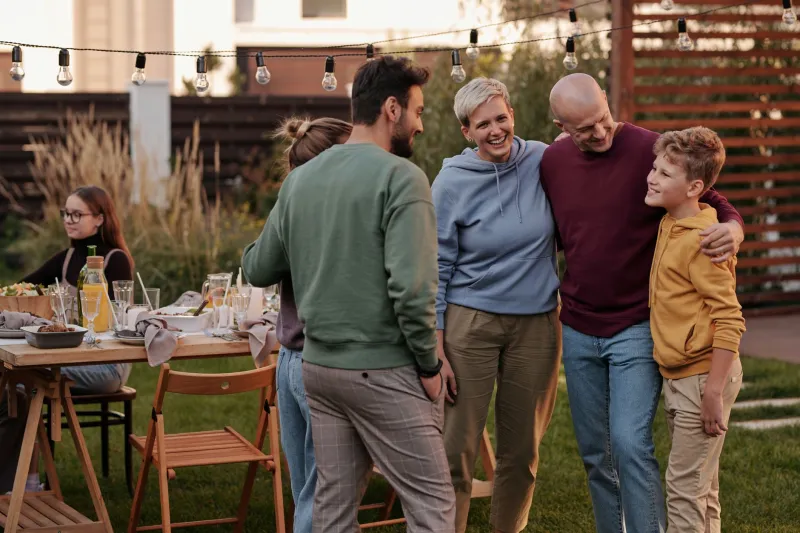
Let's be honest. The average family gathering has the energy of a DMV waiting room with worse snacks. Somebody's kid is running in circles. Grandma is being cornered by a cousin she hasn't seen since 2009. The teenagers are a single WiFi outage away from a full-scale revolt. And somewhere in the background, there's an uncle—nobody's quite sure whose—eating a plate of something and staring at a wall.
It doesn't have to be this way.
With the right design philosophy, a family party can be something people genuinely look forward to rather than schedule around. The secret isn't a bigger budget or a fancier venue—it's understanding that your guests aren't a monolith, and treating them like it.
Stop Designing One Party and Start Designing a Party Universe
The biggest mistake hosts make with family gatherings is trying to create a single experience that works for everyone. Spoiler: it won't. A 72-year-old retired school principal and a 14-year-old who communicates primarily through memes do not have the same entertainment needs.
Instead, think in zones. Divide your space—whether it's a backyard, a rented hall, or a sprawling living room—into distinct areas that cater to different energy levels and interests. You want a quiet lounge zone (soft seating, low noise, maybe a puzzle or two for the crowd that finds small talk exhausting), an activity hub (lawn games, a craft table, something with mild competitive stakes), a kids' corner (fully stocked, ideally supervised, and ideally soundproofed), and a social core where the food and drinks live and the natural mingling happens.
When people have options, they stop feeling trapped. And when people stop feeling trapped, they actually relax and start having fun. Revolutionary concept.
The Seating Chart Is Not the Enemy—Bad Seating Charts Are
For sit-down meals, resist the urge to seat people by family unit. That's how you get three hours of the same four people talking about the same four things. Instead, try strategic cross-pollination: pair the shy cousin with the gregarious neighbor, put the kid who loves sports next to the grandparent who watches every game, seat the new in-law next to the person most likely to make them feel welcome.
If you're going buffet or cocktail-style, this becomes even easier—just make sure your furniture arrangement creates natural conversation clusters rather than one long wall of chairs that turns the room into a high school dance.
For the truly commitment-averse, name cards with conversation prompts on the back are a low-key genius move. Something like "What's the most embarrassing thing that happened to you this year?" or "What's a skill you have that nobody at this table knows about?" gets people talking without the pressure of cold-starting a conversation from scratch.
Activity Design That Doesn't Make Adults Feel Like They're at a Children's Birthday Party
Activities at family gatherings often skew one of two ways: either they're designed exclusively for kids (and adults stand around watching), or they're so aggressively adult that the younger crowd is bored into oblivion within twenty minutes.
The sweet spot is multi-generational games with adjustable stakes. Lawn games like cornhole, bocce ball, or a giant Jenga set work across almost every age group. Trivia with category-based rounds (pop culture, history, sports, food) lets different generations shine in different moments. A family photo scavenger hunt—where teams of mixed ages compete to capture specific shots—is chaotic in the best possible way and produces content everyone actually wants to keep.
For a longer gathering, consider a low-key talent show or a round of family-specific trivia ("Which family member once accidentally drove to the wrong city for a wedding?"). These create shared reference points that become the stories people tell for years.
Give Introverts an Escape Route (Without Making It Obvious)
Not everyone at your party wants to be performing sociability for four hours straight. That's not a character flaw—it's just how some people are wired. If you don't account for them, they'll spend the whole party in the bathroom or hovering near the exit.
Designate at least one low-stimulation area where people can decompress without it feeling like they're hiding. A reading nook, a porch with a couple of chairs, or even a quiet room with a good playlist and some board games gives introverts permission to take a breather without disappearing entirely. They'll come back refreshed and more present—and they'll appreciate you more than you know for making space for them.
The Awkward Uncle Problem (And Why He's Actually Your Secret Weapon)
Every family has one. The relative who shows up to everything but seems to exist slightly outside the social fabric—not quite rude, not quite warm, just... present in an unresolved sort of way. The instinct is to manage him, route guests away from him, or hope he stays near the chips.
Better instinct: give him a role.
People who feel purposeless at parties often check out or become disruptive. But give someone a job—grilling duties, managing the music, running a lawn game bracket, being the designated photographer—and they transform. Purpose creates investment. Investment creates engagement. Suddenly the awkward uncle is the guy everyone's high-fiving after a great bocce shot.
This applies across the board. Teenagers who feel like they've been dragged somewhere become great activity facilitators if you ask them. Elderly relatives who feel sidelined will light up if you give them a moment to share expertise or a story. Nobody wants to feel like furniture.
Food and Drink Logistics That Keep the Peace
Food is the universal language of family gatherings, and it's also the fastest way to start an argument. Keep the main spread crowd-pleasing and dietary-inclusive—label everything, account for common restrictions, and don't make anyone feel like they have to interrogate every dish.
For longer gatherings, stagger the food rather than putting everything out at once. A mid-afternoon snack station, a proper meal hour, and a dessert moment spread across the event give people reasons to reconvene throughout the day and prevent the dreaded post-meal energy crash that sends half your guests to their cars.
The Follow-Through That Turns a Good Party Into a Family Legend
After the gathering, send out a quick photo album or a shared folder of the best shots. A group text with a highlight or two. A handwritten note if you're feeling nostalgic. The follow-through is what cements the memory and makes people actually want to do it again.
Because here's the truth about family parties: the bar isn't "perfect." The bar is "we actually liked each other today." Clear that bar, and you're already winning.