Block, Bite, Repeat: The Ultimate Guide to Throwing a Progressive Dinner Party That Makes Your Whole Neighborhood Feel Like a Five-Star Restaurant
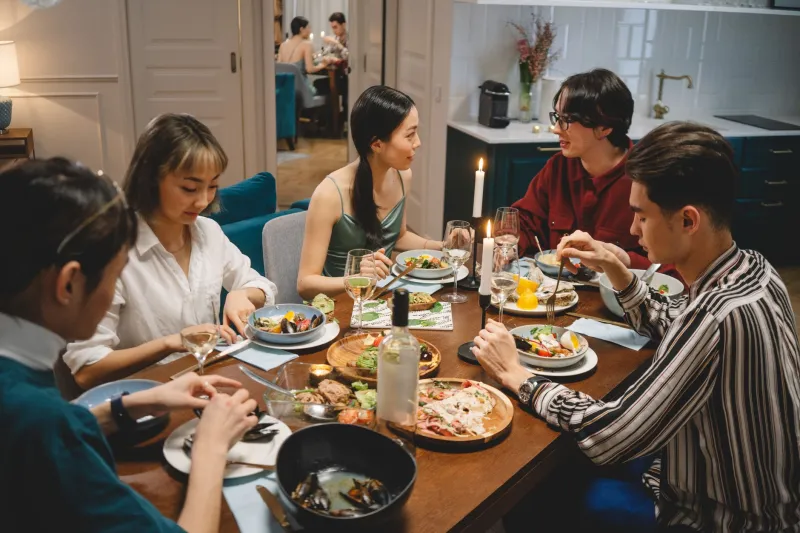
Let's be honest — dinner parties are great, but they have a ceiling. You can only rearrange your furniture so many times before the living room starts feeling like a recurring dream. Enter the progressive dinner party: the event format where guests migrate from home to home, course by course, turning an ordinary Tuesday (or Saturday, we don't judge) into a full-blown culinary tour of your neighborhood.
Think of it as restaurant hopping, except the restaurants are your neighbors' homes, the dress code is whatever you agreed on in the group chat, and nobody's waiting 45 minutes for a table. When done right, a progressive dinner party is one of the most memorable, most talked-about events you can throw — and the beauty is, no single host has to carry the whole weight of the evening. Let's break it all down.
Start With Your Squad: Recruiting the Right Neighbors
Before you start planning the menu, you need your co-hosts. This isn't a solo mission — it's a neighborhood collab. Reach out to three to five households who are genuinely enthusiastic, because a half-hearted co-host is worse than no co-host. You want people who will actually clean their dining room and not just shove everything into the coat closet.
Hold a kickoff meeting — in person or over video — to assign roles early. Decide who's handling appetizers, who's taking on the main course, who's running dessert, and whether you want to add a cocktail hour or a cheese course in between. The more clearly defined each stop is from the beginning, the less chaos you'll deal with on the night itself.
Pro tip: assign courses based on people's actual strengths. Your neighbor who makes legendary guacamole? Appetizers. The couple down the street who spent their honeymoon in Tuscany? Main course, obviously.
Build a Menu That Tells a Story
The best progressive dinners aren't just a random collection of food — they have a narrative arc. Think about how each course builds on the last, either through a unifying theme or a deliberate contrast that keeps guests on their toes.
Theme options that absolutely slap:
- Around the World: Each stop represents a different cuisine — Mexican apps, Italian pasta, French dessert. Très chic.
- Farm to Table: Every course highlights seasonal, local ingredients. Very farmers market, very Pinterest.
- Decades Night: Each home represents a different era of American food — think 1950s Jell-O molds for apps (yes, ironically), 1970s fondue for the main, and a very 2020s charcuterie dessert board.
- Regional American BBQ Tour: Appetizers from Texas, main from the Carolinas, dessert from the Deep South. This one practically plans itself.
Whatever direction you go, share the menu across all hosts in advance so nobody accidentally doubles up on garlic bread (or, worse, nobody brings it at all).
Timing Is Everything — Seriously, Everything
A progressive dinner lives and dies by its schedule. Too much time at one stop and the energy flatlines. Too little and guests are still mid-bite when someone's herding them out the door.
A solid structure for a five-stop evening:
- 6:00 PM — Welcome drinks and passed appetizers (30–45 minutes)
- 6:45 PM — First course: soup or salad (30 minutes)
- 7:15 PM — Second course: main event (45–60 minutes)
- 8:15 PM — Palate cleanser or cheese course (20–30 minutes)
- 8:45 PM — Dessert and after-dinner drinks (open-ended)
Send the schedule to all guests in advance — a simple printed card or a shared Google doc works great. And designate one person as the official timekeeper for the night. Give them a title. "Director of Flow" sounds ridiculous enough that they'll actually enjoy the job.
Make Every Stop Feel Like Its Own Destination
The magic of a progressive dinner is the sense that each home is its own little world. Encourage every host to lean into their personal style rather than trying to match a uniform aesthetic. One home might go full candlelit elegance; another might do string lights and a backyard setup. The variety is the point.
Each stop should have:
- A signature drink that ties to the course being served
- Music that fits the vibe (create a shared Spotify playlist or let each host own their stop's soundtrack)
- A small décor moment — even just a themed centerpiece or coordinated napkins goes a long way
- A conversation starter — a fun question on a card at each table, a trivia tidbit about the dish, or a quick story from the host about why they chose the recipe
These small touches are what separate a good progressive dinner from a great one.
Handling Dietary Needs Without Losing Your Mind
With multiple households involved, dietary accommodations can feel like a logistical puzzle. Solve it early. When you send out invitations, include a simple RSVP form that asks about allergies, dietary restrictions, and preferences. Share that info with every co-host immediately.
Build at least one option at each stop that works for vegetarians, and flag anything that contains common allergens like nuts, shellfish, or gluten. Nobody wants to be the host who sends a guest to the emergency room because they forgot about the peanut sauce.
If accommodating everyone feels overwhelming at a particular stop, a simple side dish or alternative plate goes a long way. The goal is that every guest feels genuinely taken care of, not like an afterthought.
Keeping the Energy Alive as the Night Rolls On
Here's the hidden challenge of progressive dinners: by the time you hit stop three or four, people have eaten a lot, possibly had a few drinks, and the couch at the dessert house is starting to look very appealing. Your job is to keep the momentum going.
A few tricks:
- Keep portions intentional. Each course should be satisfying but not stuffing. This is a marathon, not a sprint.
- Walk between stops when possible. If homes are close enough, walking the group from house to house creates a natural energy reset and gives everyone a chance to chat outside the dining room setting.
- Build in a fun activity at one stop. A quick group game, a blind taste test, or even a brief cooking demo can inject a burst of energy mid-evening.
- Save the best for last. Make sure the dessert stop has a wow factor — whether that's a dramatic presentation, a surprise guest dish, or a killer cocktail pairing.
The Invite, the RSVP, and the Logistics
Send invitations at least three weeks out. Digital invites work great — Paperless Post and Evite both have options that feel elevated without requiring you to design anything from scratch. Include the full itinerary, the dress code (if any), and whether guests should bring anything.
Decide early whether guests are contributing a dish, a bottle of wine, or nothing at all. Some progressive dinners operate purely as a host gift situation; others ask guests to bring a bottle for each stop. Either works — just be clear so nobody shows up empty-handed and embarrassed.
Why This Is the Party Format You Didn't Know You Needed
A progressive dinner party is genuinely one of those events that sounds like a lot of work until you realize you're splitting the labor across an entire crew of enthusiastic co-hosts. It builds community, showcases your neighborhood's collective talent, and creates the kind of evening that people reference for years. "Remember that progressive dinner on Maple Street?" Yes. Everyone will remember.
So rally your neighbors, assign your courses, and get ready to turn your block into the hottest restaurant in town — reservations not required.